Blog
Why Regenerative Aesthetics Is Shaping the Future of Skin Health
Aesthetic medicine is changing. For many patients, the goal is no longer simply to soften a line, replace lost volume or make an individual feature look different. There is growing interest in something more gradual: keeping the skin healthy, resilient and functioning well as it ages.
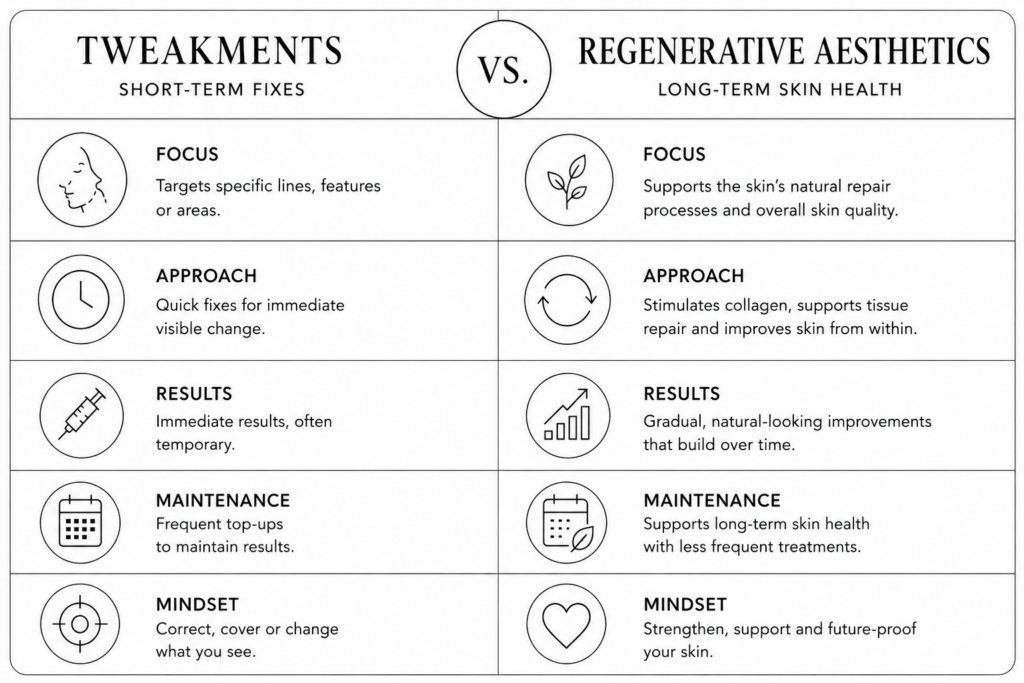
This shift has brought regenerative aesthetics into much greater focus. Rather than relying solely on treatments that create an immediate visible correction, regenerative approaches work with the body’s own repair and renewal processes. The aim may be to stimulate collagen, support tissue repair, improve elasticity or encourage healthier skin function over time.
At The Stockbridge Clinic, we increasingly see patients who want to look well rather than noticeably treated. Their concerns may be subtle. Skin feels thinner, elasticity has changed, texture is not what it once was or the complexion simply seems less resilient.
Regenerative aesthetics offers a different way to think about these changes, with long-term skin health becoming part of the conversation rather than focusing only on what can be corrected today.
“Tweakments” became a popular way of describing small aesthetic adjustments designed to subtly alter or refresh someone’s appearance.
There is nothing inherently wrong with that approach. The important change is that patients are becoming more interested in what is happening within their skin, rather than only what can be changed on the surface.
This is partly because ageing is not simply a matter of individual lines appearing. Collagen production changes. Skin becomes less elastic. Repair processes become less efficient and the quality of the tissue itself can gradually deteriorate. Someone may therefore notice that their skin looks crepey, tired or less firm without being able to identify one particular feature that needs correcting.
Treating an isolated line does not necessarily address those wider changes.
Regenerative aesthetics instead asks how we can encourage the skin to function better. The emphasis moves from repeatedly correcting individual signs of ageing towards supporting skin repair, collagen production and tissue quality over time.
Regenerative aesthetic treatments are designed to stimulate or support biological processes already involved in maintaining and repairing healthy skin.
Our skin is constantly renewing itself. When tissue is damaged, the body initiates a healing response involving cells, signalling molecules and structural proteins such as collagen. Regenerative treatments make use of these processes in different ways. Some provide biological components associated with repair. Others stimulate collagen production or create a carefully controlled response that encourages the skin to remodel itself.
At The Stockbridge Clinic, key examples include:
They are different treatments, but the underlying philosophy is similar. Rather than simply adding or disguising, they aim to encourage the skin to respond.
Polynucleotides have become an important part of regenerative aesthetics because they focus primarily on the quality and condition of the tissue.
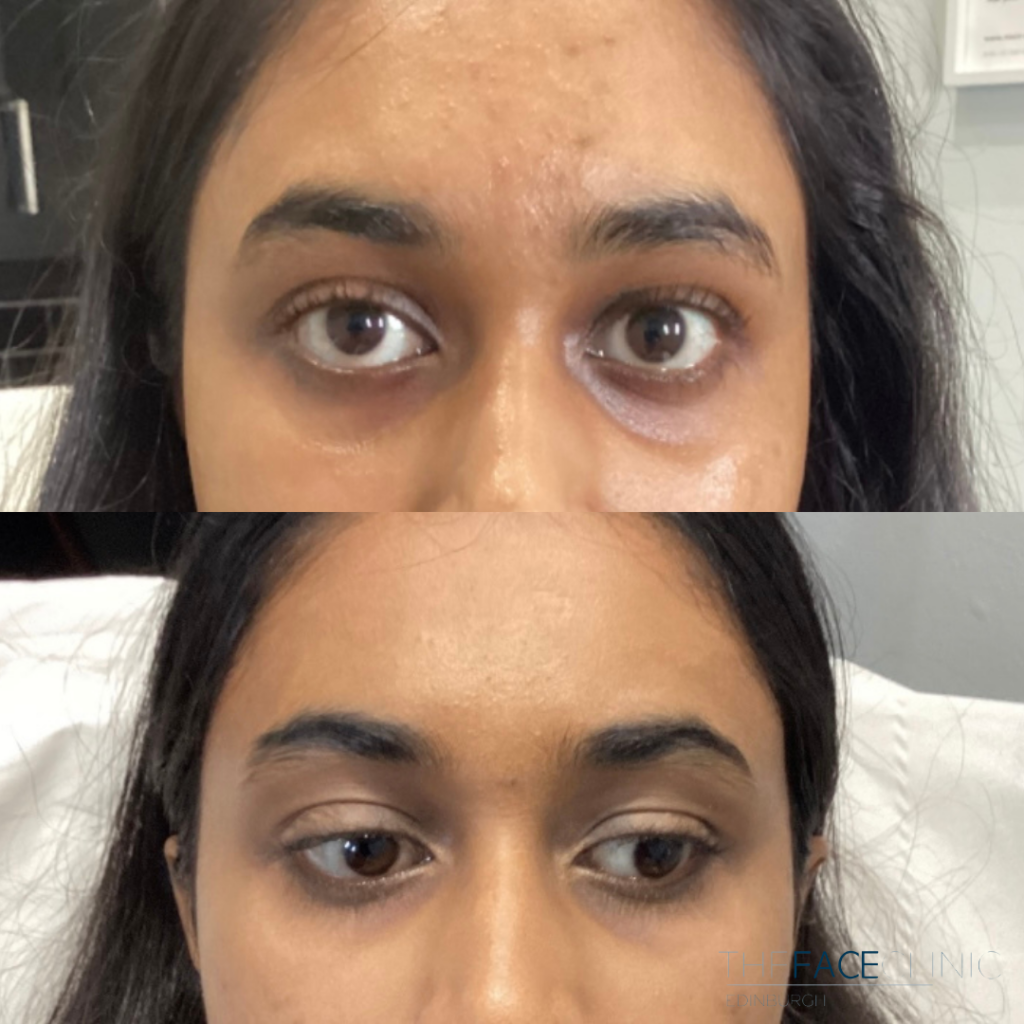
They are DNA-derived compounds injected into targeted areas to support tissue repair while stimulating collagen production and improving hydration and elasticity. This makes them particularly relevant when the concern is not necessarily lost volume.
A patient might have good facial structure but notice that their skin has become thinner, less resilient or more crepey. In this situation, simply adding volume may not address the actual concern.
Polynucleotides allow the focus to remain on the skin itself. The changes are designed to develop progressively rather than creating an immediate transformation. This fits closely with the wider regenerative approach: improving the environment and quality of the tissue rather than trying to make the face suddenly look different.
Platelet-Rich Plasma, or PRP, is one of the clearest examples of using the body’s own biology within aesthetic medicine.
A small amount of the patient’s blood is taken and processed to concentrate the platelets. The platelet-rich component is then reintroduced into the targeted area.
Platelets contain growth factors involved in healing and tissue repair. When used for skin rejuvenation, PRP is intended to support processes including cellular regeneration and collagen production.
There is an important distinction here. PRP is not being used to physically fill a line or reshape the face. The treatment provides a stimulus and the body does the subsequent biological work. That also explains why regenerative aesthetics requires a different mindset from treatments where the result can be assessed immediately. Skin repair and collagen remodelling take time.
Collagen is fundamental to the strength and structure of healthy skin, but its production changes as we age. Collagen biostimulators are designed to encourage the body to produce more of its own collagen rather than relying solely on an injected product to create the final effect.
JULÄINE™ represents this regenerative approach at The Stockbridge Clinic. Rather than simply filling or masking age-related changes, it works with the skin’s biology to stimulate collagen. This can be particularly relevant where changes in firmness, elasticity or underlying skin support are becoming more noticeable. Results are therefore expected to develop gradually as the body’s collagen response takes place. For patients, that gradual progression can be an important advantage. The objective is not a sudden change in facial proportions, but an improvement that develops as the skin remodels.
Regenerative aesthetics does not have to involve an injectable treatment. Microneedling demonstrates this particularly well. Fine needles create tiny, controlled micro-injuries in the skin. These trigger the body’s natural healing response, stimulating collagen and elastin production as the skin repairs itself.
Secret RF Microneedling builds on this principle by combining microneedling with radiofrequency energy delivered into deeper layers of the skin. This provides an additional stimulus for collagen production and skin tightening.
These treatments can be particularly useful where texture, scarring or more established changes in skin quality are part of the concern. The principle remains regenerative: a controlled stimulus is used to encourage the skin to repair and remodel itself.
Many patients do not want their aesthetic treatment to be identifiable. They may want firmer skin, better texture or a healthier-looking complexion, but still want to look recognisably like themselves.
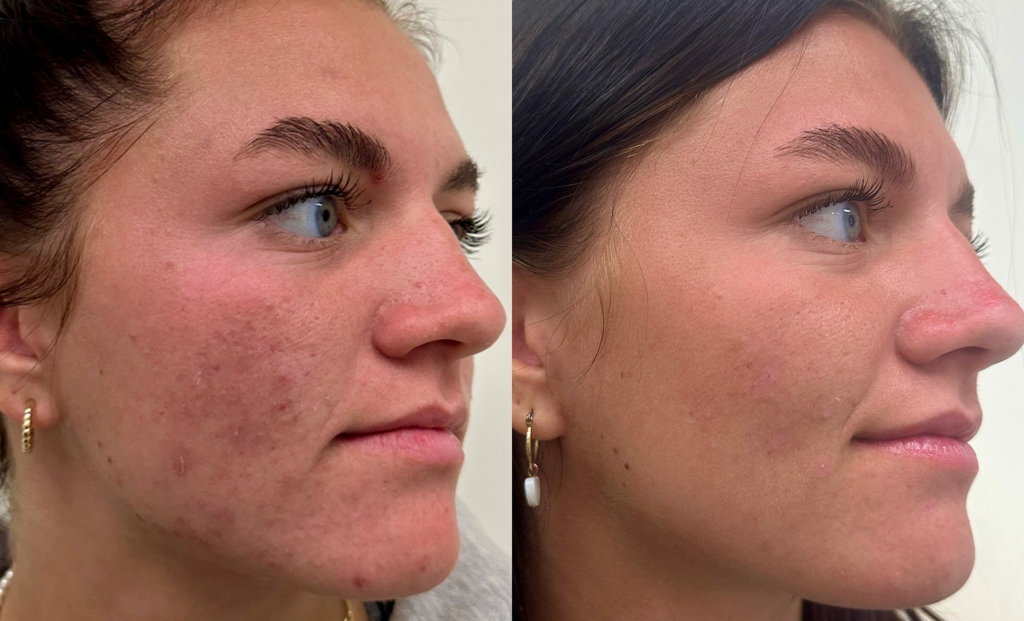
Regenerative treatments fit naturally into this approach because improvement often develops progressively. Collagen takes time to form. Tissue remodelling takes time. Skin repair takes time. Rather than creating a dramatic before-and-after moment, the change can be a gradual improvement in how healthy, firm or resilient the skin appears.
This does not mean regenerative treatments are automatically better than more traditional aesthetic procedures. They simply have a different purpose. If the issue is genuine volume loss or a structural concern, a regenerative treatment may not provide the correction required. But when the primary concern is declining skin quality, focusing on the biology of the skin can make more sense than treating every visible change individually.
The growing interest in regenerative aesthetics reflects a wider change in what patients expect from aesthetic medicine. Looking younger is no longer always the central objective. Increasingly, people want their skin to remain strong, healthy and resilient while still looking entirely like their own skin.
That changes how treatments are selected. Instead of asking how quickly a visible concern can be corrected, the conversation can include what is happening to collagen, tissue quality and the skin’s capacity for repair.
Regenerative aesthetics does not stop ageing, nor does it remove the need for other forms of aesthetic medicine. What it provides is another way to approach ageing, with greater emphasis on supporting the skin rather than continually changing it.
Regenerative aesthetics is a broad and increasingly popular term, but the treatments within it are not interchangeable and the evidence behind them varies. Rather than choosing something simply because it is described as “regenerative”, it is more useful to consider the individual treatment, the concern being treated and whether its mechanism is appropriate for your skin. A consultation should establish what you are trying to improve before deciding whether a regenerative approach is worthwhile.
Polynucleotides and microneedling work in different ways, which means they may form part of the same treatment plan when appropriate. Microneedling creates a controlled healing response, while polynucleotides are used to support tissue repair, hydration and elasticity. They do not necessarily need to be performed at the same appointment, and the timing should be determined by your practitioner according to your skin and how it recovers.
Neither is universally “better”. PRP uses a concentration of your own platelets and associated growth factors, whereas polynucleotides are injectable DNA-derived compounds used to support tissue repair and skin quality. The choice depends on your skin, the area being treated and what you are hoping to improve rather than one treatment being superior for everyone.
Both can stimulate collagen, but they create that response differently. A collagen biostimulator such as JULÄINE™ is introduced into the tissue to stimulate collagen production over time. Microneedling instead creates controlled micro-injuries that trigger the skin’s natural wound-healing response. This difference can influence which approach is more appropriate for concerns such as skin support, texture or scarring.
There are limits to what topical skincare can achieve, particularly where concerns involve deeper collagen loss, established textural change or scarring. This does not mean everyone who reaches a plateau with skincare needs an aesthetic treatment. It does mean that an assessment can help establish whether the concern is something skincare can realistically influence or whether an in-clinic regenerative treatment may be appropriate.
Regenerative aesthetics is changing the conversation from simply treating what we can see today to thinking about how the skin can be supported for the years ahead.
The most effective approach begins by identifying what has actually changed. For one patient that may mean improving tissue quality with polynucleotides. For another, collagen biostimulation with JULÄINE™ may be more appropriate. PRP, microneedling or Secret RF Microneedling may play different roles again.
If you would like to explore regenerative aesthetics, you can book a consultation at The Stockbridge Clinic in Edinburgh. Your skin, concerns and goals can be assessed before deciding whether an individual regenerative treatment or a carefully staged combination is the most appropriate approach.